
" height="15.714285714285712px" id="HuUY1YOMY" transform="translate(2 4)" width="20px"/></svg>)
" height="18px" id="smOoqr7Ui" transform="translate(3 3)" width="18px"/></svg>)
Bijak Berplastik - Waste Management App | Case Study
Connecting field collection, approvals, and reporting into one operational platform

Client:
Danone's Recycling Business Unit (RBU)
Category:
Mobile App & Web Dashboard
My Role:
UI/UX Designer
Tools
Adobe XD, Figma, Figjam
Transforming fragmented waste collection into a connected operational ecosystem
Bijak Berplastik is a waste management platform designed for Danone's Recycling Business Unit (RBU) to digitize operational workflows for plastic waste collection. The platform supports the end-to-end transaction process between waste collectors, including pemulung, bank sampah, and lapak besar/kecil, and RBU's internal operational teams, covering collection submissions, weighing documentation, transaction approvals, payment tracking, and reporting.
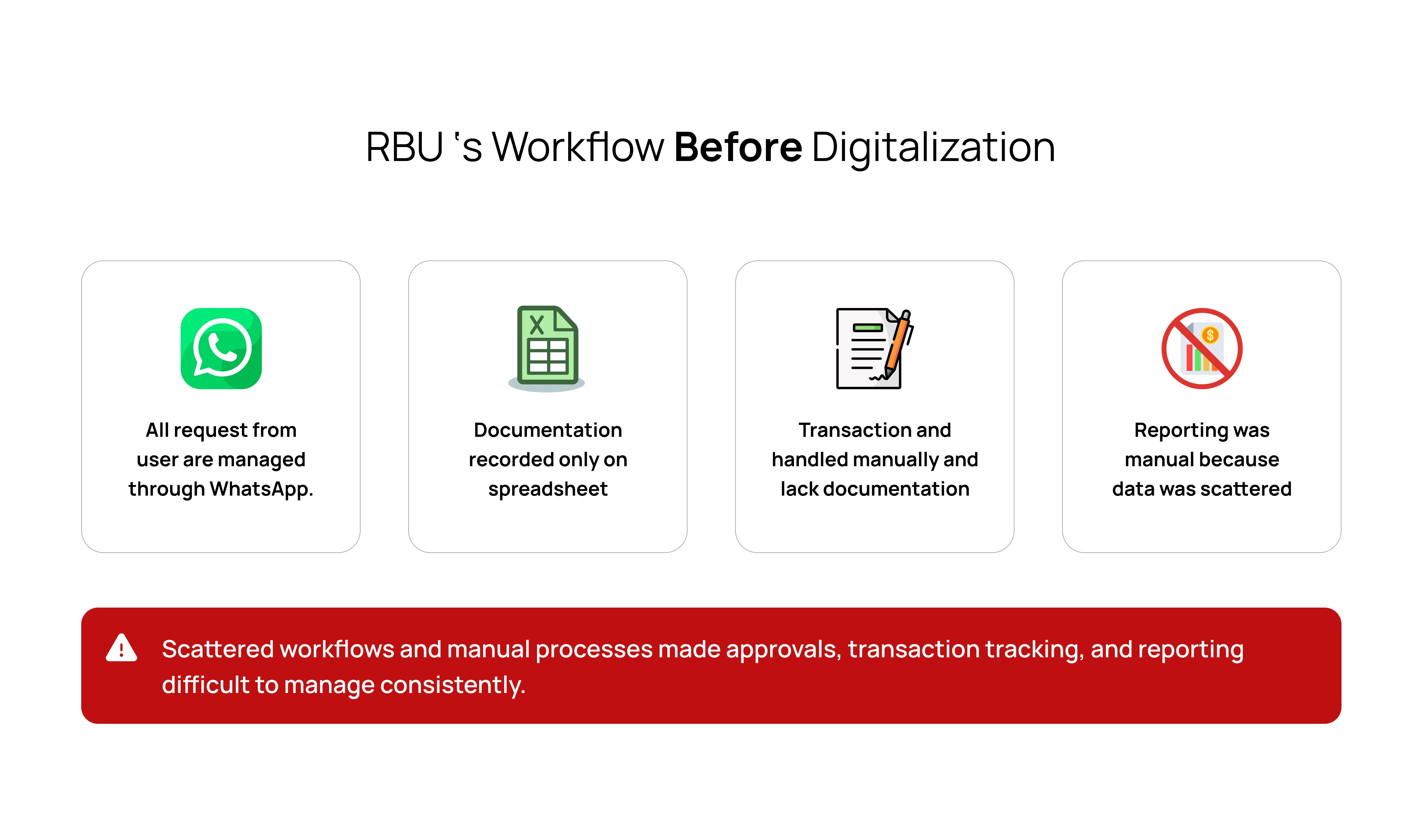
Before the platform was introduced, daily operations depended on spreadsheets, WhatsApp, phone calls, and manual approvals. While these processes supported existing operations, they made transaction histories difficult to trace, limited cross-team visibility, and required manual reporting, creating challenges as RBU expanded its operations across multiple cities.
To address these challenges, the project redesigned fragmented operational workflows into a connected ecosystem consisting of a mobile application for collection partners and a web dashboard for internal teams. By centralizing operational data and approval processes, the platform improved transaction visibility, streamlined reporting, and provided a scalable foundation for future operational growth.
My Role & Scope
I led the end-to-end design process as the sole UI/UX Designer across three design sprints over five months. My responsibilities included requirement analysis, Design Sprint facilitation, user flow mapping, wireframing, high-fidelity UI design, prototyping, and developer handoff. Throughout the project, I collaborated closely with the Business Analyst, Project Manager, engineers, and stakeholders from Danone's Recycling Business Unit to translate complex operational processes into intuitive digital workflows.

What's the issue?
Scattered communication and manual documentation limited operational visibility.
Before Bijak Berplastik, operational workflows relied on spreadsheets, WhatsApp, phone calls, and manual approvals. While these processes supported day-to-day operations, they became increasingly difficult to scale as Danone's Recycling Business Unit (RBU) expanded into multiple cities.
Because transaction data and communication were spread across multiple channels, teams struggled to track transaction histories, maintain documented approval records, and monitor operational progress consistently. Reporting depended on manual recaps, increasing the risk of missing records and human error while limiting real-time operational visibility across the organization.
Design Process
Building a connected operational ecosystem through iterative design, stakeholder validation, and cross-platform workflow planning.
Phase 1 : Understand
We began by analyzing RBU's existing operational workflows, which relied on spreadsheets, WhatsApp, phone calls, and manual approvals. Through requirement gathering and process mapping, we identified pain points in transaction tracking, reporting, and cross-team visibility, while understanding the operational needs required to support future expansion across multiple cities.
Phase 2 : Ideate
After mapping the end-to-end operational flow, we identified an opportunity to split the ecosystem into two dedicated platforms: a web dashboard for internal operational teams and a mobile application for collection partners. This approach reflected how each user group worked in their daily environment while keeping both platforms connected through the same operational workflow.
Phase 3 : Decide
Before designing the interface, we reviewed the proposed workflows with stakeholders to validate approval hierarchies, reporting requirements, and operational responsibilities. During these discussions, we also concluded that not every process should be digitized. Negotiation and day-to-day coordination remained on phone calls and WhatsApp, while the platform focused on digitizing structured, traceable transactions.
Phase 4 : Design & Prototype
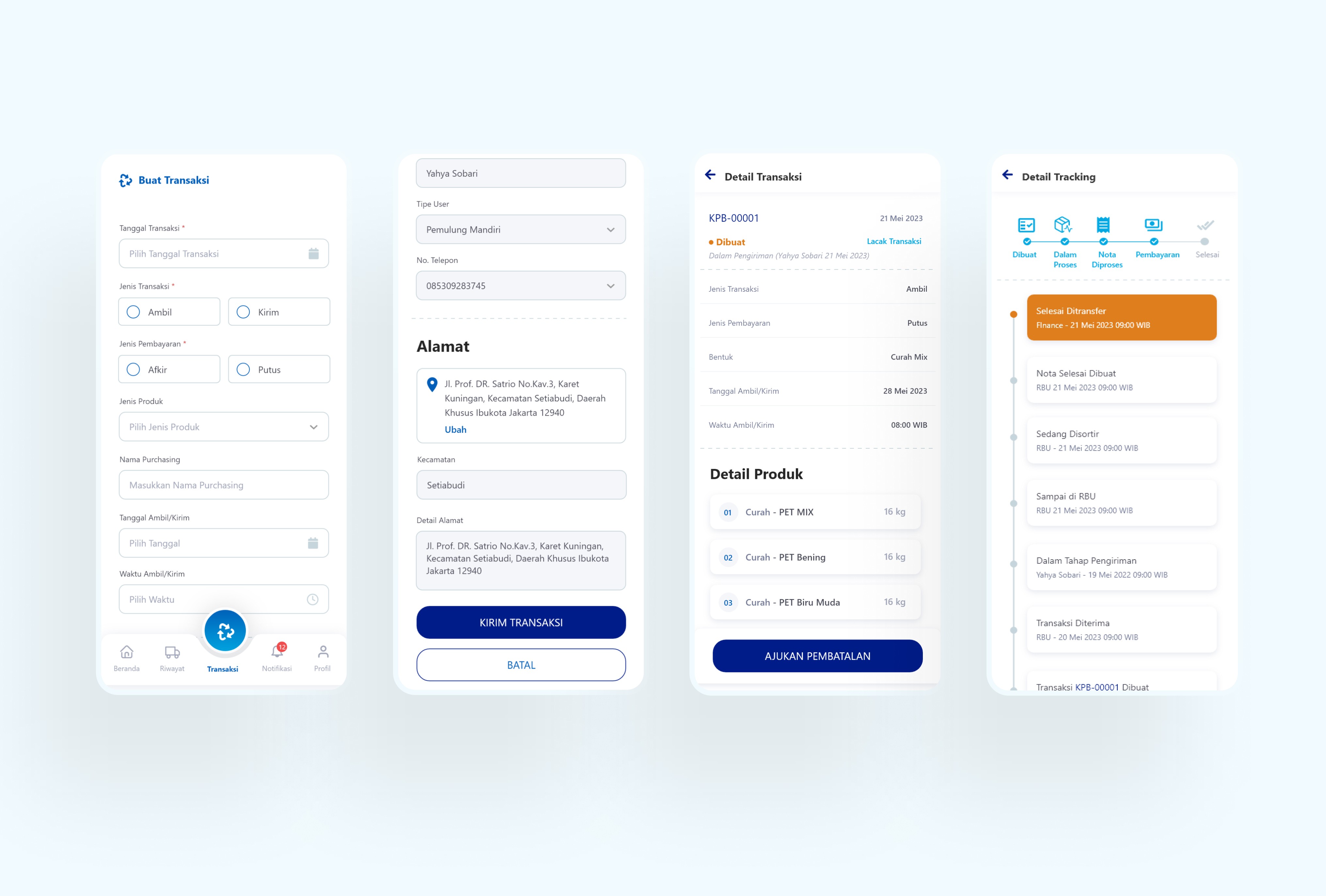
The solution was developed across three iterative design sprints, with mobile and web experiences designed in parallel to support complete operational workflows. Features such as collection submissions, pickup requests, vehicle assignments, transaction approvals, payment tracking, and reporting were designed as connected experiences across both platforms.
Phase 5 : Iteration
At the end of each sprint, designs were reviewed with stakeholders before development. Feedback from these validation sessions helped refine workflows, simplify operational tasks, and ensure the solution aligned with both real operational behavior and technical feasibility.

What's the solution?
A connected operational ecosystem designed to centralize transaction management, approvals, and reporting.
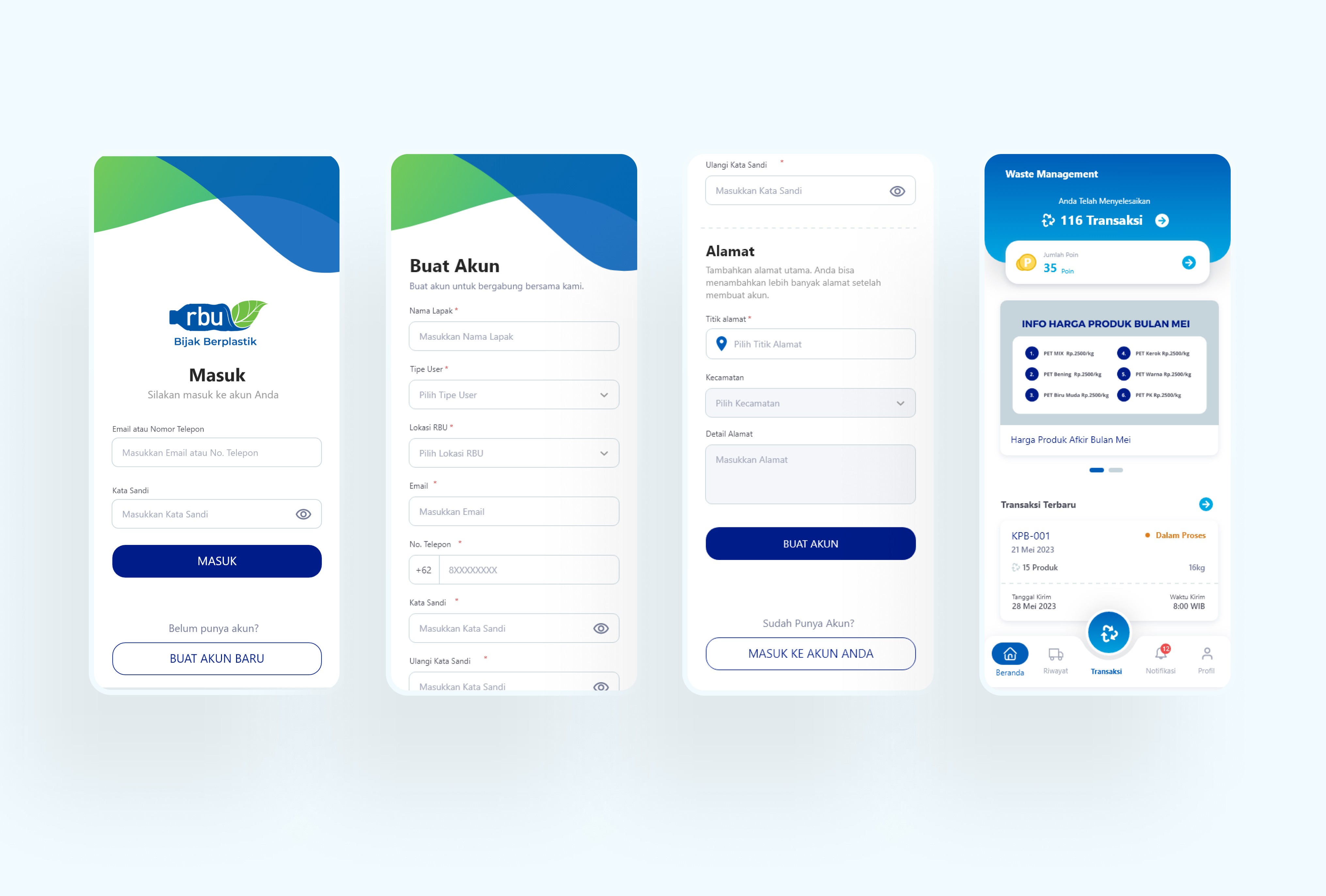
The final solution consisted of two connected platforms tailored to different user groups while supporting a single operational workflow.
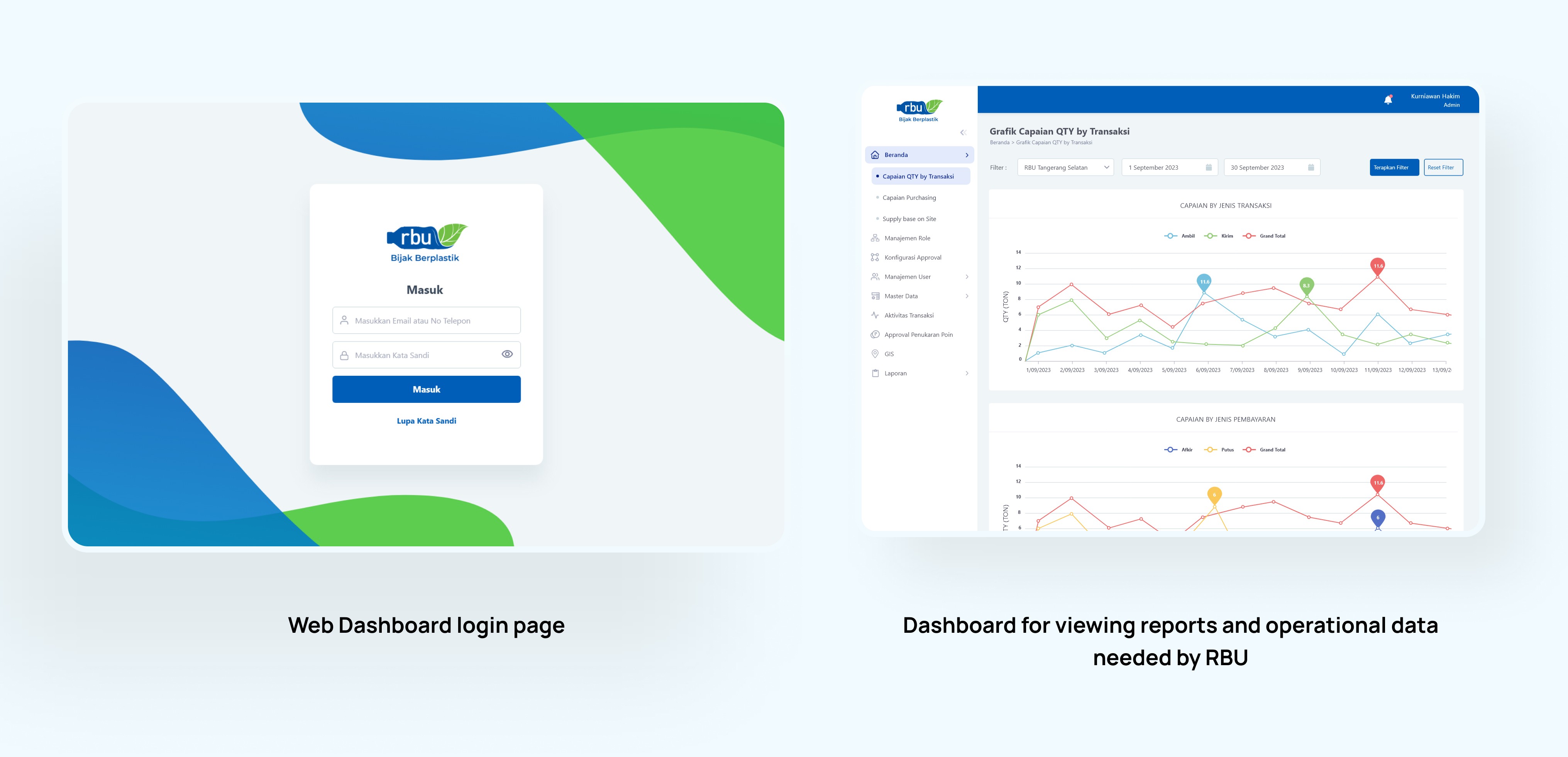
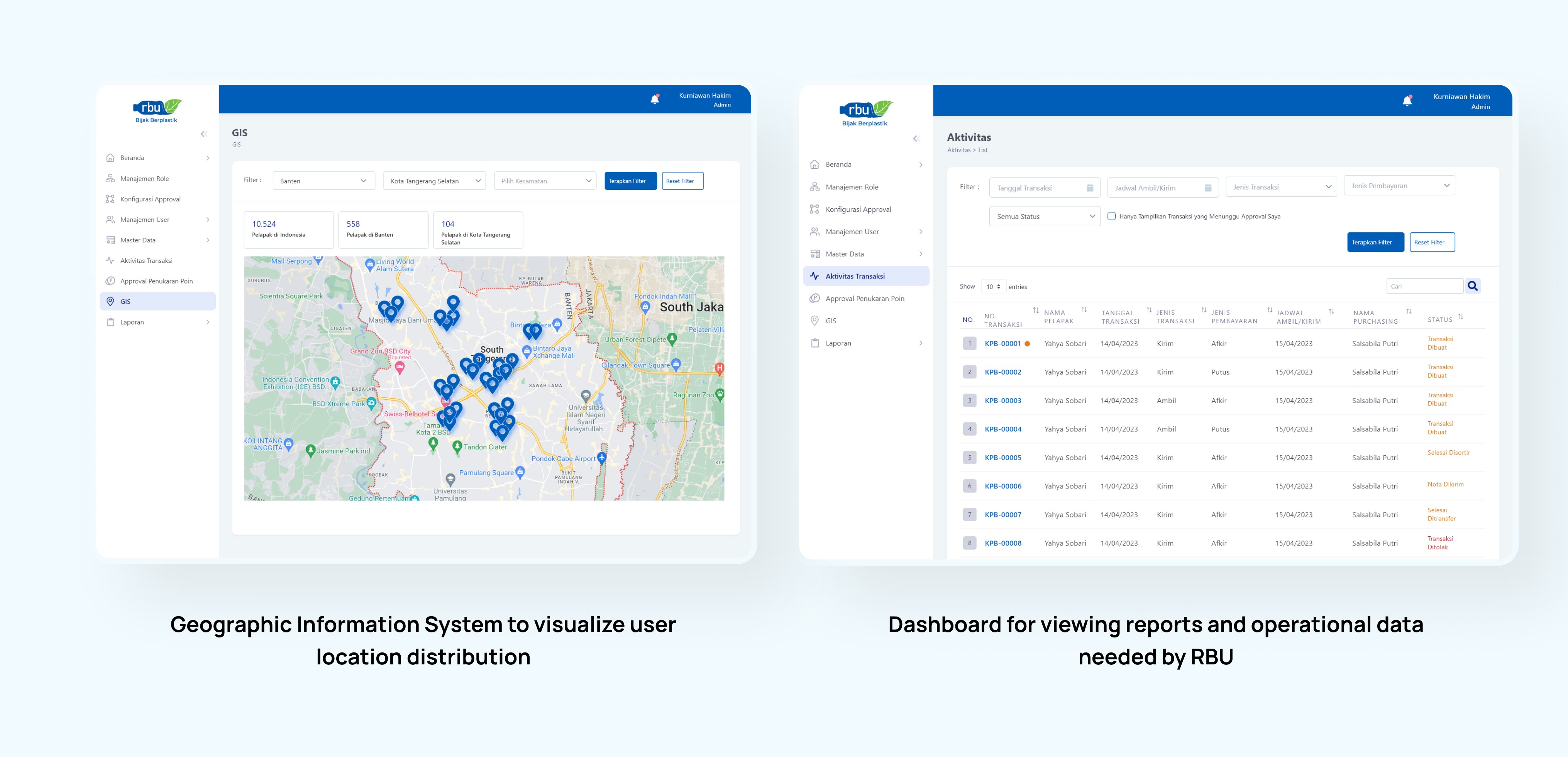
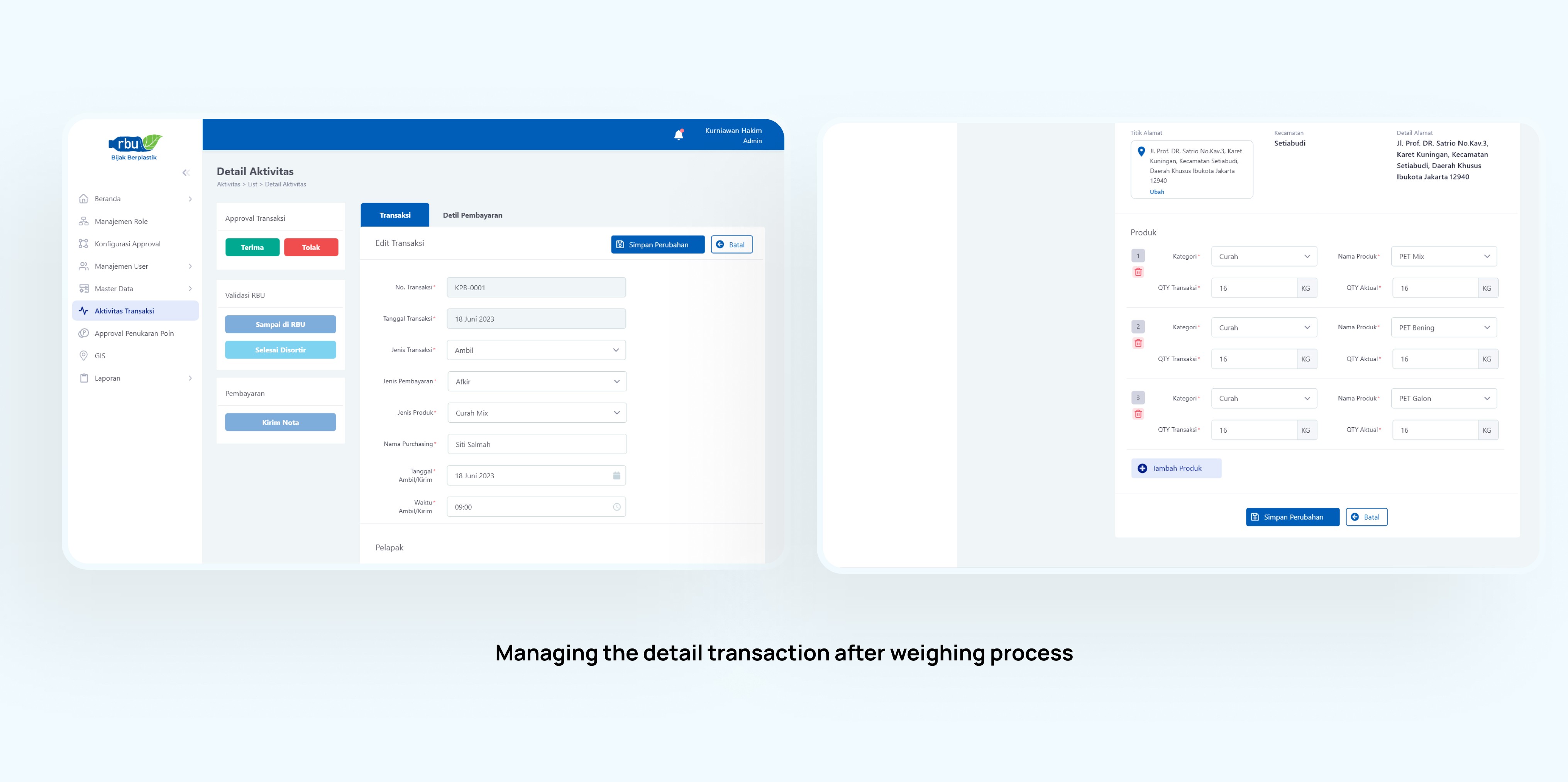
The web platform enabled internal RBU teams, including Admin, Accounting, Purchasing, Warehouse Managers, and department heads, to manage transaction approvals, warehouse operations, payment validation, and reporting through a centralized dashboard.
The mobile application was designed for collection partners, including pemulung, bank sampah, and lapak besar/kecil, allowing them to submit recyclable materials, request pickups, track transaction progress, monitor payment status, and receive operational updates.
Rather than digitizing every interaction, the platform intentionally preserved operational flexibility. Price negotiations and day-to-day coordination remained on phone calls and WhatsApp, while structured processes such as collection submissions, approval routing, transaction validation, and reporting were centralized into a traceable digital workflow that improved operational visibility across RBU teams.
Outcome
The project was delivered over three design sprints within five months, resulting in a mobile application for collection partners and a web dashboard for internal operational teams. The product was successfully launched and is available on the Google Play Store.
Throughout the project, stakeholders from Danone's Recycling Business Unit actively participated in sprint reviews and validated each iteration before development. By replacing fragmented spreadsheets, phone calls, and WhatsApp-based coordination with a centralized operational platform, the project transformed a previously manual process into a connected, trackable workflow that better supports day-to-day operations and future expansion.
Reflection
Designing an operational ecosystem means connecting different user experiences into one workflow.
This project taught me that designing an operational ecosystem is not just about creating separate experiences for internal teams and collection partners. It is about understanding how those experiences connect to support a single operational workflow.
While the web platform focused on operational visibility, approvals, and reporting, the mobile application prioritized simple task completion for collection partners. Connecting these two experiences required more than digitizing existing processes. It also meant deciding which workflows should remain outside the platform to minimize disruption and encourage early adoption.
One of the biggest lessons from this project was realizing that preserving familiar communication channels, such as phone calls and WhatsApp, was an intentional product decision rather than a limitation. By digitizing structured processes while leaving negotiation and day-to-day coordination unchanged, we reduced adoption barriers and supported a smoother transition from manual operations to a digital ecosystem.
Ultimately, the project reinforced that successful digital transformation is not about replacing every existing process. It is about designing systems that people can realistically adopt while creating value for every stakeholder involved.
Related Projects

